
By Serge Espoir MATOMBA
« Great powers do not become great solely because of their resources or military strength. They become great because they know how to defend, together, their strategic interests whenever history calls. »There are moments that transcend individuals. Moments that transcend nations. Moments that shape the future of an entire continent. The election of the next Secretary-General of the United Nations is one such moment.Yet, once again, Africa seems hesitant at the very moment history is calling.For decades, our continent has paid the price of its divisions. Whenever major decisions are made and geopolitical balances are reshaped, Africa is often absent—or represented by voices that do not necessarily reflect a genuine continental consensus.
Why?
Because we too often appear incapable of defending our strategic interests together. Our national rivalries, political disagreements, and sometimes even personal disputes outweigh Africa’s greater collective interest.This is precisely why other powers often choose their own interlocutors to speak on behalf of our continent instead of allowing Africans to build their own leadership.The election of the next Secretary-General of the United Nations therefore represents an exceptional opportunity.Established on October 24, 1945, following the entry into force of the UN Charter, the United Nations has become the world’s principal institution responsible for maintaining peace, promoting international cooperation, and upholding international law. The office of Secretary-General, first held in 1946, remains one of the most important diplomatic responsibilities in the world.
Africa at a Historic Crossroads
The African continent still holds no permanent seat on the United Nations Security Council and enjoys no veto power. Although Africa represents more than 1.5 billion people and fifty-four UN member states, it remains underrepresented in the body where the world’s most critical decisions on international peace and security are made.At the same time, the United Nations is facing a profound crisis of credibility.
Division as a Strategic Obstacle
The divisions within the Security Council over the Iraq War in 2003, the controversies surrounding the intervention in Libya in 2011, the crises in the Sahel, the conflicts in Sudan, the war between Russia and Ukraine, the tragedy in Gaza, tensions involving Iran, and many other international crises have exposed the limitations of the current system.Time and again, disagreements among the major powers have prevented the Organization from speaking with one voice or acting with the effectiveness expected by the international community.This situation raises a legitimate question: Is the United Nations still equipped to meet the challenges of the twenty-first century, or must it undertake a profound reform of its governance?The issue is not merely about reforming a few procedures.
The United Nations and the Crisis of Global Governance
It is global governance itself that is now being questioned.The United Nations needs new momentum.It needs leadership capable of engaging all major powers, restoring trust between the Global North and the Global South, bridging differences among competing geopolitical blocs, and advancing ambitious reforms that serve the interests of all.
Macky Sall’s Candidacy and Our Collective Responsibility
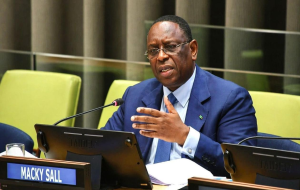
In this context, Macky Sall’s candidacy deserves careful consideration.It is not a symbolic nomination designed to create the illusion of African representation. It is the candidacy of a former Head of State who understands both the realities of Africa and the complexities of international diplomacy.As Chairperson of the African Union in 2022, Macky Sall notably advocated for the reform of global governance and reaffirmed Africa’s long-standing demand for two permanent seats on the Security Council, along with fairer representation within international decision-making institutions.
African Unity to Shape Tomorrow’s World
Whether or not one agrees with his political vision, one fundamental question deserves to be asked:Is Africa capable of rallying behind one of its own when he seeks one of the highest international offices?Diplomatic disagreements are normal.Competing candidacies are also legitimate.But when some Africans devote more energy to weakening an African candidacy than to defending the continent’s strategic interests, one cannot help but question our collective ability to build genuine African power.The real issue extends far beyond the person of Macky Sall.It concerns the place Africa intends to occupy in tomorrow’s world.It concerns our ability to influence the reform of international institutions.It concerns our capacity to speak with one voice whenever the continent’s highest interests are at stake.African foreign ministries must fully assume their responsibilities.African ministers of foreign affairs must intensify their diplomatic efforts.African heads of state must persuade their counterparts.African diplomacy must demonstrate the same determination that other major regions of the world display when defending their own candidates.Ultimately, this is not merely about Macky Sall.It is about whether Africa wishes to continue watching history unfold from the sidelines or whether it is finally ready to claim its rightful seat at the table where the future of the world is being shaped.History will remember not only the name of the next Secretary-General of the United Nations. It will also remember Africa’s response to this historic moment.Were we able to rise above our rivalries in defense of our continent’s higher interests?Did we understand that, in an increasingly polarized world, unity has become the very condition of influence?Today, this is not simply about one candidate.It is about Africa’s place in tomorrow’s global governance.It is about our capacity to shape major international reforms.It is about deciding whether we will continue to endure history—or begin to write it.Africa asks neither for favors nor privileges.It simply demands that its demographic, political, economic, and civilizational weight finally be recognized for what it truly is.But such recognition will never be granted freely.It must be earned through vision, courage, and above all, unityIf we fail to unite when one of our own seeks one of the highest international offices, we cannot blame others for making decisions without us.The great powers defend their candidates with unwavering determination.Africa must learn to defend its own with the same conviction whenever they embody an ambition greater than themselves.The time for sterile divisions has passed.The time has come to demonstrate that Africa is capable of speaking with one voice whenever its future is at stake.For beyond the election of a Secretary-General, it is the credibility of our continent that is being tested.And history never waits for those who hesitate.Africa has a rendezvous with history.May it, this time, answer the call.